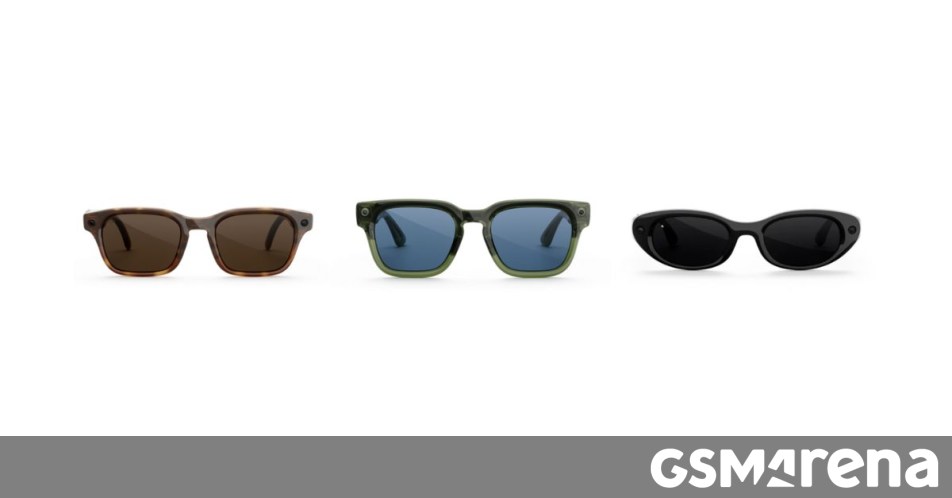
Meta has launched a new generation of smart glasses developed with EssilorLuxottica - the same optical giant behind Ray-Ban - and this time the product line comes with sharper specs, wider availability, and a Kylie Jenner collaboration that will either excite or confuse you, depending on where you stand.
What You’re Actually Getting
The camera sits at 12MP, identical in resolution to the Ray-Ban Meta glasses that have been on shelves for a while now. The upgrade here is in video: the new Meta Glasses shoot up to 3K resolution at 30fps, and still images land at 3,024 x 4,032 pixels. That’s a meaningful step for anyone who’s tried to document a trip hands-free and ended up with footage too soft to share. Street scenes, landscapes, spontaneous moments in a market or at a trailhead - the 3K ceiling gives you something actually usable.
Fit gets real attention in this version. Adjustable three-way nose pads, adjustable temple tips, and overextension hinges mean these aren’t a one-size-endures-a-long-haul-flight situation. For people who wear glasses full-time while traveling, that kind of physical adaptability matters more than spec sheets suggest. The glasses also support prescription lenses through Meta’s Rx Lens Swap program, which removes a practical barrier that has kept a large portion of potential buyers from ever seriously considering smart glasses.
Audio runs through an open-ear speaker system paired with a multi-microphone array - same general architecture as Meta’s previous model. Noise reduction is now onboard, which is relevant for anyone trying to take calls in airports, train stations, or windy outdoor environments. The system handles calls, music, podcasts, and voice commands, so you’re not reaching for your phone every twenty minutes.
The AI side runs on Meta’s new Muse Spark model, accessed through a dedicated action button. It’s not a passive feature sitting in the background - it’s the primary interface. Navigation, queries, photo commands: all of it routes through that button and through Meta AI.
Battery, Connectivity, and the Charging Case Math
Eight hours of battery on a single charge is the quoted figure. That covers a full day of city walking, a long train ride, or an international flight without needing to pull out a cable. The bundled charging case extends total usage to 40 hours, which is enough for three to four full travel days without access to a wall outlet.
Connectivity includes Wi-Fi 6, Bluetooth 5.4, and Bluetooth LE. Wi-Fi 6 support is worth noting because it means the glasses can take advantage of faster networks when available - hotel Wi-Fi, airport lounges, co-working spaces - rather than being capped by older wireless standards. Bluetooth 5.4 keeps the connection to your phone stable and low-power.
The glasses also support a Neural Band accessory from Meta. Details on exactly what that accessory does in a travel context aren’t the headline here, but its compatibility signals that Meta is building this as a platform rather than a standalone device with a fixed feature ceiling.
Two features are coming later this month that are directly relevant to travelers: Dynamic Photo and pedestrian navigation. Pedestrian navigation in particular - if it delivers - would change the day-to-day use case significantly. Turn-by-turn audio directions through your glasses while your phone stays in your bag is a more practical solution for city navigation than most current options.
The three frame styles are Adventurer, Fury, and Meta Glasses by Kylie. Over 26 frame and lens combinations are available across those styles. The Kylie Jenner collaboration is what it is - a fashion-forward edition that will appeal to a specific buyer. The Adventurer and Fury names suggest more rugged or neutral positioning. Across all three styles, the prescription lens support remains available.
Price, Availability, and Where to Buy
Starting at $299, the Meta Glasses are priced above casual impulse territory but below the ceiling of what serious travelers typically spend on camera gear or audio equipment. For context, that’s less than many mirrorless camera lenses and roughly in line with premium over-ear headphones - two categories this product partially overlaps.
Availability at launch covers seventeen countries: the US, UK, Canada, France, Italy, Spain, Germany, Ireland, Sweden, Denmark, Norway, Finland, Austria, Belgium, the Netherlands, Switzerland, and Australia. That’s a broad rollout that skips almost none of the major English-language and Western European markets.
Retail channels include Meta.com, Amazon, LensCrafters, Best Buy, and Sunglass Hut. The LensCrafters and Sunglass Hut placements are strategically useful for prescription buyers - you can walk in, get fitted, and handle the Rx Lens Swap process in person rather than navigating it online. Best Buy and Amazon cover the convenience end. For travelers already researching purchases before a trip, having multiple purchase points across physical and digital retail means you’re unlikely to hit a stock problem.
The honest question for any reviewer is whether $299 justifies the full package or whether you’re paying a premium for the AI integration that you’ll use occasionally and then mostly ignore. The camera and audio specs are strong enough to stand on their own. Pedestrian navigation arriving later this month will determine whether the AI layer feels like infrastructure or like a feature demo. At 40 hours of total battery life with the case included, the hardware commitment to extended use is real - and $299 is the price Meta is asking you to test that claim against.