The Redmi K90 Ultra goes official on June 30 in China, and if the specs-to-price ratio holds up at launch, it will move fast. Here’s what you need to know before that window opens.
What You’re Actually Buying
Redmi confirmed the K90 Ultra via Weibo, and the announcement covered more than just a date - it laid out the core hardware and a pricing target that puts the phone squarely in the CNY 3,000 segment, which converts to roughly $440 USD. That’s the number to keep in your head as everything else gets evaluated.
The processor is a Snapdragon 8 Elite. Not the newer Snapdragon 8 Elite Gen 5, which you’ll find in flagships shipping later this year, but Redmi’s argument is that the chip itself isn’t the whole story. The K90 Ultra includes a built-in active cooling fan - physically integrated into the device - which Redmi says can drop the phone’s surface temperature by up to 10°C within 100 seconds of sustained load. That’s a specific, testable claim, and it’s the foundation of the phone’s gaming performance pitch.
The thermal argument extends into benchmark comparisons. Redmi says the K90 Ultra can hold 60fps at maximum graphics settings for a full 60 minutes without throttling. The company’s internal figures show Snapdragon 8 Elite Gen 5 devices beginning to throttle after 20 minutes under the same conditions. On a MOBA title - tested at 144fps mode - the K90 Ultra is claimed to sustain that frame rate for 180 minutes at an ambient temperature of 30°C, while the Gen 5 devices reportedly start dropping off after 35 minutes.
Whether those numbers hold in independent testing remains to be seen, but the framing is deliberate: this is a phone positioned for people who play for extended sessions, not people who need the newest node on the spec sheet.
How to Prepare for the June 30 Launch
Understand the China-First Release Model
The K90 Ultra launches exclusively in China on June 30. Redmi hasn’t announced global availability yet, which means your purchase path depends heavily on where you are. If you’re in mainland China, the standard route is through JD.com, Tmall, or Redmi’s own official store - all of which typically open pre-orders within hours of a launch event and ship within one to three business days on popular models.
If you’re outside China, the picture is more complicated. Cross-border purchasing through platforms like JD Global or third-party grey-market importers is an option, but it introduces risks: no local warranty coverage, potential band incompatibility depending on your carrier’s LTE and 5G frequencies, and customs fees that can add meaningfully to that $440 baseline. The CNY 3,000 price point is the domestic China price - import costs will push your real number higher.
Check Band Compatibility Before You Commit
This step is easy to skip and painful to regret. The K90 Ultra’s full radio band list hasn’t been published yet - Redmi typically releases the complete spec sheet at or just after the launch event - but you should verify 5G Sub-6GHz band support for your specific carrier before placing any cross-border order. In markets like the US, carriers including T-Mobile and AT&T rely on specific n-bands that Chinese domestic variants don’t always include. A phone that performs beautifully on a demo floor in Beijing may drop to LTE or worse on a US network.
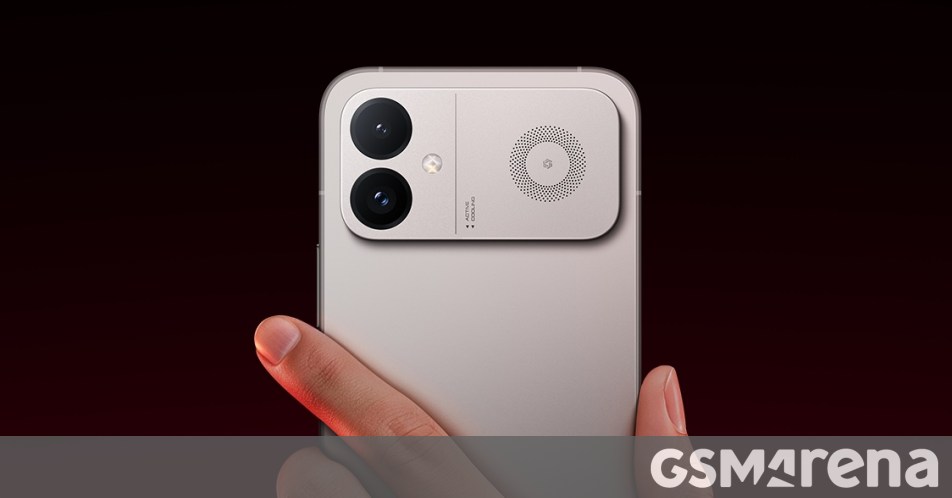
Redmi has confirmed the phone carries full-grade dust and water resistance, an aluminum alloy middle frame, and a 6.83-inch display with slim bezels. Dual rear cameras sit on a raised rectangular plateau that doubles as housing for the cooling fan - a design choice visible in the Space Silver colorway Redmi has teased. These are the confirmed physical specs. Everything else - battery size, charging speed, camera sensor details - is expected to land before or at the June 30 event.
Set a Price Alert and Watch the Weibo Feed
Redmi’s Weibo account is the primary channel for pre-launch information drops. The company has been posting spec confirmations in the days leading up to June 30, and the pattern suggests additional details - likely including battery capacity and full camera specs - will surface before the event rather than at it. Following the official Redmi Weibo account directly cuts through the noise of aggregated leaks and gives you primary-source information as it’s posted.
For pricing alerts on JD.com and Tmall, both platforms allow you to add items to a wishlist and receive notifications when a product page goes live or a pre-order opens. Set those up in advance. On popular Redmi launches, inventory at the opening price tier can be exhausted within the first few hours, particularly for the base storage configuration.
Know What the CNY 3,000 Tier Usually Means for Configuration
At the CNY 3,000 price point in China’s smartphone market, the standard configuration tends to be a mid-tier storage option - typically 12GB RAM with 256GB storage in this segment. Higher configurations (16GB/512GB or above) are usually priced CNY 200–500 higher depending on the brand’s strategy. Redmi hasn’t confirmed storage tiers yet, but planning for a range of CNY 2,999 to CNY 3,499 across configurations is a reasonable working assumption heading into launch day.
The Cooling Fan Factor: Why It Changes the Purchase Logic
Most phones in the $440 range don’t have active cooling. The ones that do - gaming-focused devices from brands like Black Shark and ASUS ROG - typically carry a price premium and a design language that signals their purpose loudly. The K90 Ultra is positioned differently: the cooling system is internal, not an attachable accessory, and the industrial design (aluminum frame, slim bezels, the Space Silver finish) reads closer to a standard flagship than a dedicated gaming device.
That positioning matters if you’re deciding between this and a competing phone in the same price bracket. The Snapdragon 8 Elite is a capable chip regardless of throttling behavior, and $440 for that processor with water resistance and a 6.83-inch display is already a strong value proposition in the Chinese domestic market. The active cooling is the factor that separates it from other Snapdragon 8 Elite phones at similar prices - and whether Redmi’s 10°C-in-100-seconds figure translates to the 60fps-for-60-minutes claim is the question that launch-day reviews will need to answer.
The 180-minute MOBA session claim at 30°C ambient is the most aggressive number in the spec sheet. Thirty degrees Celsius is a warm room, not a controlled lab, and sustaining 144fps in a MOBA for three hours is a high bar. If it holds, it’s a meaningful differentiator at this price. If it doesn’t, the phone is still a Snapdragon 8 Elite device with water resistance for roughly $440.
The launch event is June 30. CNY 3,000.